Children Feature in More Than One-Third of Parents’ Social Media Posts
- 29% of Romanian children have asked their parents to remove photos, videos or other content shared about them – the highest percentage in the European comparison presented by the European Commission.
- A study published in March 2026 found that more than seven out of parents’ 20 most recent social media posts featured at least one of their children.
- Parents sharing content about their children on social media has been linked to increased family conflict, particularly when the content is posted on TikTok and YouTube.
Bucharest, 18 August 2026 – Nearly one in three Romanian children aged 9 to 16 has asked their parents to remove content posted about them online, according to EU Kids Online data highlighted in 2026 by Horizon Magazine, the European Commission’s research and innovation publication[i].
Romania recorded the highest percentage in the comparison, at 29%, while Lithuania ranked at the opposite end, with only 3% of children reporting that they had asked their parents to remove such content. In most of the countries surveyed, up to one-third of children said their parents had posted something about them without first asking for their permission.
These findings offer a different perspective on digital safety. The conversation typically focuses on how much time children spend online, the inappropriate content they may encounter or the strangers they may interact with. However, research suggests that a child’s first breach of digital privacy may occur within the family itself, when parents begin shaping their child’s online identity before the child is able to decide what they want to make public.
Seven in 20 Posts Feature Children
The scale of the phenomenon is further highlighted by a 2026 study [ii]involving 470 parents who share content about their children online. On average, more than seven of their 20 most recent posts featured at least one of their children.
For adults, photos and videos can be a way to preserve memories, share important moments or stay connected with family and friends. For children, however, the same post can mean losing control over their own image, having a private moment exposed or acquiring a digital identity they did not choose.
The study identifies a complex relationship between sharenting and family dynamics. Sharing content featuring children was associated both with a greater sense of closeness reported by parents and with increased parent–child conflict, particularly when children appeared in content posted on TikTok or YouTube.
The Child’s Right to Say “No”
The perspective of Isabelle Filliozat, one of Europe’s leading authorities on positive parenting, emotional development and trauma-informed approaches, places respect for children, attention to their needs and recognition of the boundaries they express at the heart of this conversation.
“Children want to do what is right. They want to behave well. As long as they are respected, they will show respect in return,” says Isabelle Filliozat[iii].
Applied to the digital space, this principle means that parents should not treat their child’s image as content they alone have the right to control. Asking for permission before posting, explaining where the photo will appear, respecting the child’s refusal and removing the content if the child no longer feels comfortable are all ways for adults to show that the child’s voice and boundaries matter. In this context, digital consent becomes a tangible expression of respect within the parent–child relationship, as well as one of the first lessons through which children learn that they have the right to protect their image and privacy.
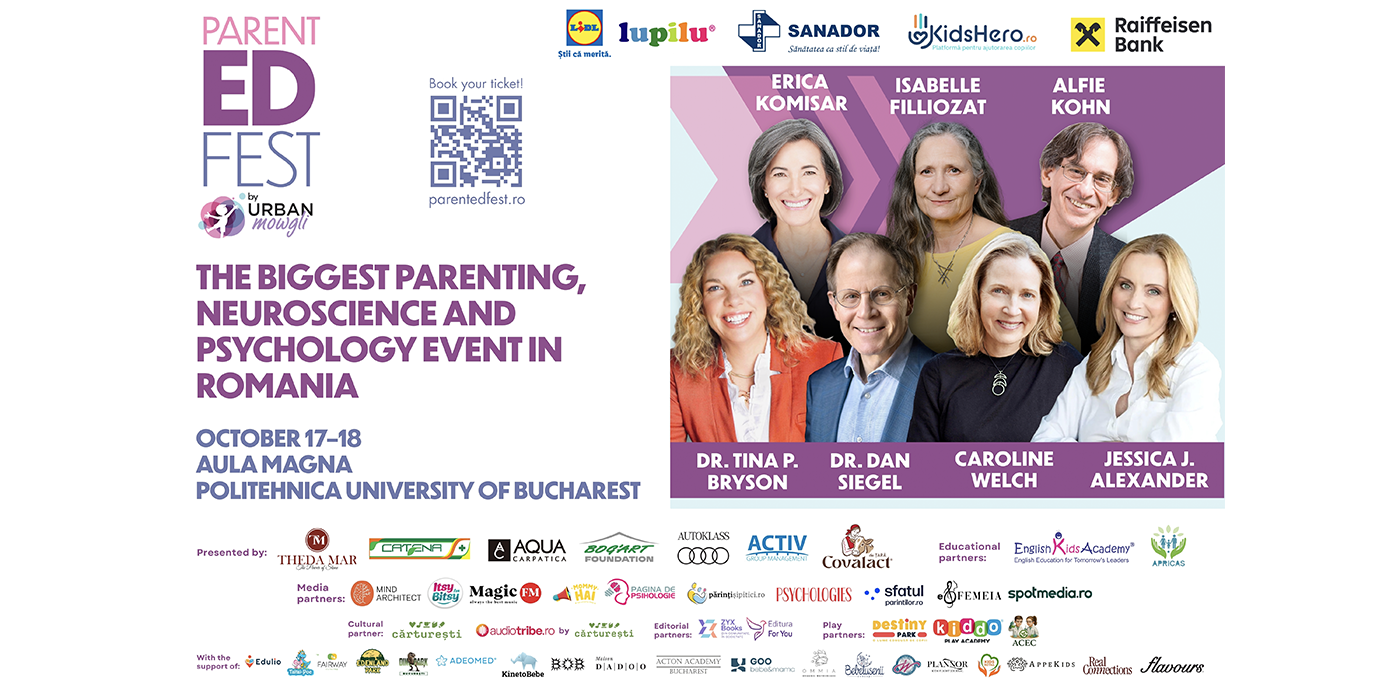
Isabelle Filliozat will make her first appearance in Romania at ParentED Fest, taking place on 17–18 October 2026 at the Aula Magna of the National University of Science and Technology POLITEHNICA Bucharest. Her talk will explore parent–child relationships, emotional development and the challenges facing families in an increasingly digital world.
This year’s edition of the parenting festival will bring together seven internationally renowned experts in child psychology and education: Alfie Kohn; Erica Komisar, making her first appearance in Romania; Isabelle Filliozat, also appearing in Romania for the first time; Dr Tina Payne Bryson; Dr Dan Siegel, returning by popular demand; Caroline Welch; and Jessica Joelle Alexander, returning to ParentED Fest for the second time.
The event is supported by: Strategic Partner: Lidl Romania / Lupilu; Healthcare Partner: SANADOR; Empowerment Partner: Kids Hero Foundation; Growth Partner: Raiffeisen Bank. With the support of: ThedaMar, Catena, AQUA Carpatica, Bog’Art Foundation, Autoklass Audi Ploiești, Activ Group Management and Covalact. Educational Partners: English Kids Academy and APRICAS. Media Partners: Mind Architect, Itsy Bitsy FM, Magic FM, Mommy Hai, Pagina de Psihologie, Părinți și Pitici, Psychologies, e-femeia, Sfatul Părinților and SpotMedia. Cultural Partners: Cărturești and AudioTribe. Publishing Partners: ZYX Books and Editura For You. Play Partners: Destiny Park and Kiddo Play Academy.
[i] Horizon Magazine – Are parents sharing too much online? The hidden risks for children
[ii] Posting Parenthood: Patterns of sharenting and their impact on parent-child relationships
[iii] Interview with Isabelle Filliozat – Les Adultes de Demain