- 57% of Europeans are at risk of depression, and specialists warn that parental stress and burnout can have direct effects on children’s emotional development.
- The first three years of life are critical for a child’s development. Access to quality care, secure relationships, and free play directly influence brain development, as well as emotional, social, and cognitive skills.
- “The relationship between parent and child is where the child’s mind develops”, says Daniel J. Siegel[i], one of the world’s leading experts in interpersonal neuropsychiatry and child development.
Bucharest, April 21, 2026 – More than half of Europeans (57%) are at risk of depression, according to the latest report published by Eurofound[ii], the European Union agency specializing in living and working conditions. The data indicates low levels of emotional well-being among the adult population, against a backdrop of economic pressure, uncertainty and increasing difficulty in balancing personal life with daily responsibilities.
Specialists warn that the effects of this pressure do not stop at the individual level. International research shows that parental stress is associated with emotional and behavioural difficulties in children. More specifically, when parents experience prolonged periods of tension and emotional exhaustion, children are more likely to exhibit anxiety, behavioural issues or difficulties in managing emotions.
Experts say the impact is not limited to moments of crisis but is most often felt in everyday routines: a lack of patience, repeated conflicts, constant rushing or emotional unavailability can affect the family environment and a child’s sense of security.
The effects are even more significant in the first years of life, a crucial period for child development. The Harvard Center on the Developing Child[iii] shows that more than 80% of brain development takes place before the age of 3. This is also when the foundations of language, emotional self-regulation, trust and learning ability are established, with relationships with close caregivers playing a decisive role.
“Early experiences literally shape the architecture of the child’s brain and lay the foundation for how they will learn, relate and manage their emotions later in life,” emphasizes Daniel J. Siegel, one of the world’s leading experts in interpersonal neuropsychiatry and child development.
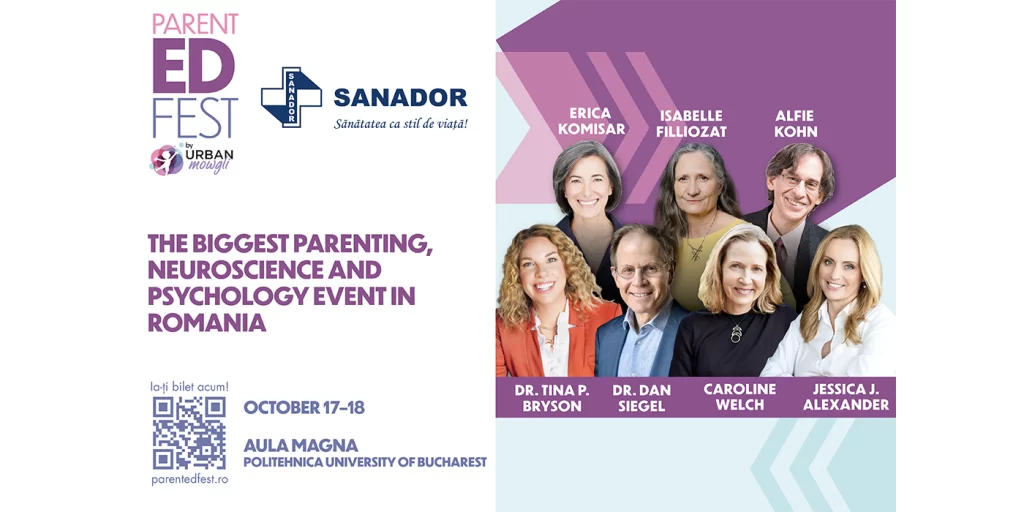
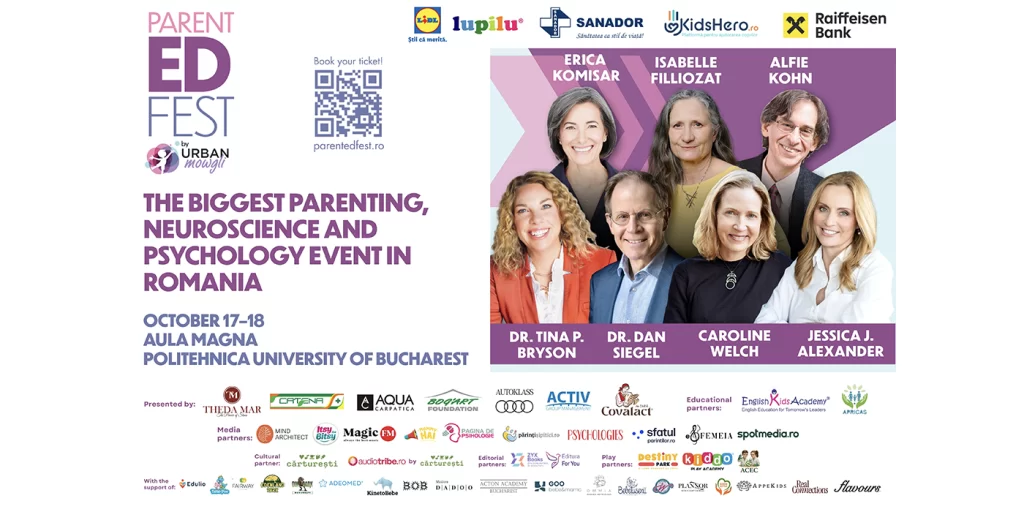
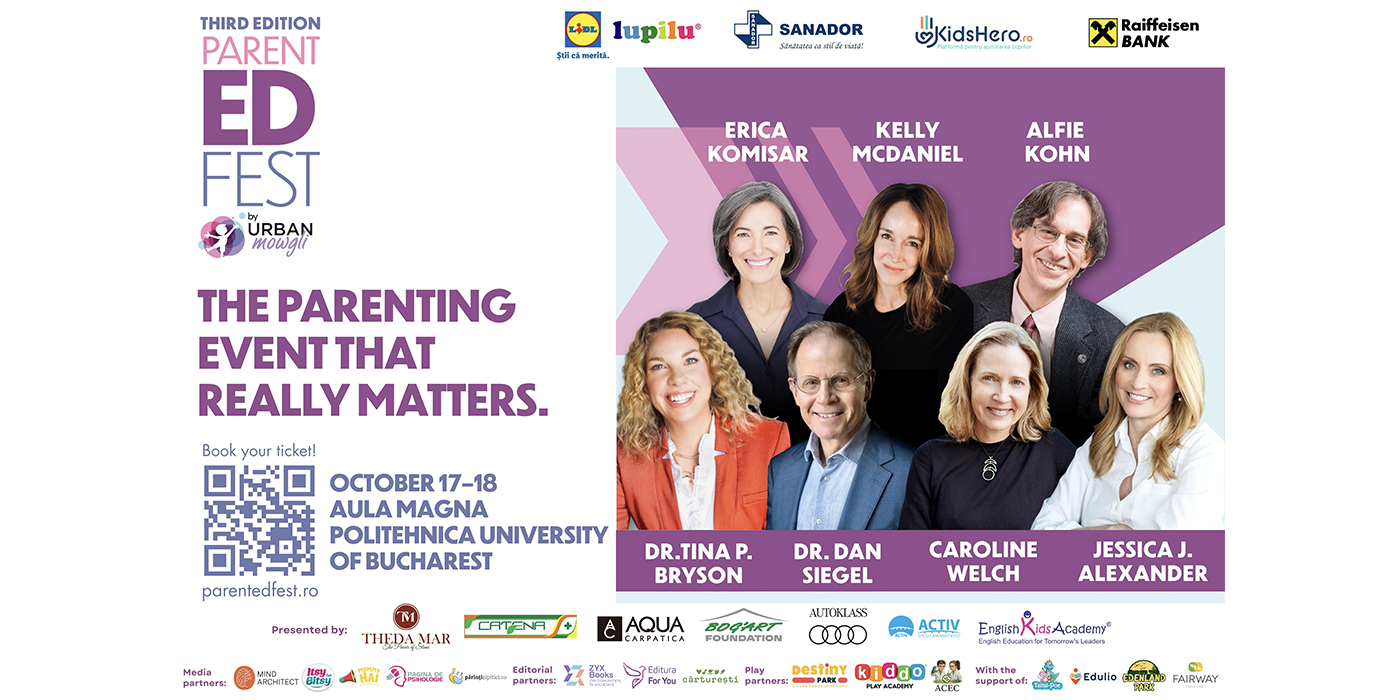
“The relationship between parent and child is where the child’s mind develops,” says Siegel, who will return to Bucharest this autumn, by popular demand, to speak at ParentED Fest 2026 on the impact of early relationships on child development, emotional regulation, and the challenges of modern parenting.
Play is not wasted time. It is the foundation of child development
Child development specialists emphasize that free play, secure relationships and quality time spent with adults are essential elements in the early years of life, when the emotional, social and cognitive foundations of a child are formed.
“We often believe we are helping children by pushing them to perform as early as possible. In reality, children learn best when they are given the space to explore, play and discover at their own pace. This is how they develop self-confidence, autonomy and intrinsic motivation to learn. Free play does not hold them back—it prepares them for life,” says Jessica Joelle Alexander[iv], author of the bestseller The Danish Way of Parenting.
One of the international voices promoting the Nordic parenting model, Jessica Joelle Alexander will return to Bucharest on October 17–18 for ParentED Fest 2026, where she will speak about the role of play in child development, emotional balance and the lessons Romanian families can learn from the Danish model.
Caroline Welch, one of the most acclaimed international authors and experts in psychology, mindfulness and conscious leadership, will explore topics such as emotional balance in the family, managing parental stress, and how parents can cultivate presence and calm in their relationship with their children at ParentED Fest 2026.
Event supported by:
Strategic Partner: Lidl Romania / Lupilu; Healthcare Partner: Sanador; Empowerment Partner: Kids Hero Foundation; Growth Partner: Raiffeisen Bank. Supported by: ThedaMar, Catena, Aqua Carpatica, Bog’Art Foundation, Autoklass Audi Ploiești, Activ Group Management. Educational Partner: English Kids Academy. Media Partners: Mind Architect, Itsy Bitsy, Mommy Hai, Pagina de Psihologie, Părinți și pitici, SfatulParintilor.ro. Publishing Partners: ZYX Books, For You Publishing House, Cărturești. Play Partners: Destiny Park, Kiddo Play Academy, ACEC. The event is organized with the support of: Tzitzi Poc, Edulio, Edenland Park, Fairway.
[i] https://drdansiegel.com/book/parenting-from-the-inside-out/
[ii] https://www.eurofound.europa.eu/en/publications/all/uneven-picture-of-a-changing-europe-findings-from-living-and-working-in-the-eu-e-survey-2025
[iii] https://www.sciencedirect.com/science/article/pii/S0021755724000408
[iv] https://developingchild.harvard.edu/key-concept/brain-architecture/